How Long Does Culinary School Take to Complete?

Let’s be realistic here – EVERYONE starts at the bottom. But there are many success stories from those who have done just that.

At a culinary school, you will receive a comprehensive culinary education in a relatively short period, providing the fast track to a new career. The application process is also relatively easy to get into culinary school.

You need to take into account the whole gamut: From time spent learning basic principles and kitchen techniques, to advanced topics and obtaining actual hands-on experience to know the time it takes to complete culinary education. It can take anywhere from a few short months to four years, depending on the chosen length of culinary school.

There are different options you can choose when you enroll, and factors that can affect the length of your studies. For instance, professional culinary training can take 2 to 4 years.

There are dedicated culinary schools where that’s all they do; there are community colleges that offer a certificate or degree in a more classroom-focused experience, and there are four-year degree programs that combine culinary arts with business and hospitality skills.

You can choose from Diploma or Certificate Programs

  • A diploma or certificate can be earned in about six to 12 months, on average
  • The time frame depends on how much time you can devote to school.
  • It combines classroom learning and hands-on experience in the field of study.
  • You gain real-world career experience.
  • There are often financing options available to help with the cost of a diploma or certificate program (i.e. budget-friendly monthly payments).

Diploma or certificate programs typically offer lesson-based classes, each with a specific focus. You will get hands-on experience as you learn cooking techniques, practice your skills, and oftentimes work in a real-world environment, a HUGE plus for your career.

Degree Programs

Whether you choose an “arts” or “science” approach, you will find different culinary training options at the associate’s, bachelor’s, and master’s levels.

An associate’s degree can be earned in two years; a bachelor’s degree in four years; a master’s degree in two years (after you attain a bachelor’s degree).

The type of degree you pursue will determine the length and depth of your studies.

A bachelor’s degree includes a four-year curriculum that may expand on the associate’s degree and be more focused on the business aspect of cooking, such as management or hospitality.

In addition to meeting general education requirements, you will have an additional two years of instruction in other areas, such as budgeting, inventory, and managing staff (the business stuff).

Culinary Arts, Culinary Management, Restaurant Management, and Hospitality are common degree choices. Johnson and Wales University offers a Liberal Arts program for aspiring chefs, providing a broad spectrum of knowledge and skills.

A master’s degree includes an additional two years of instruction after a bachelor’s degree is completed. You usually need to complete a thesis once you have finished all of your coursework. Also, since these degrees dive deeper into culinary theory and concepts, they often involve more intensive focus, such as nutrition, food science, or hospitality.

Whether you choose to pursue Culinary Arts, Culinary Management, or Liberal Arts degree or commit to a higher-level master’s education, you will find culinary training options and pastry-making options to meet your education needs at the college or university level.

Culinary Schools

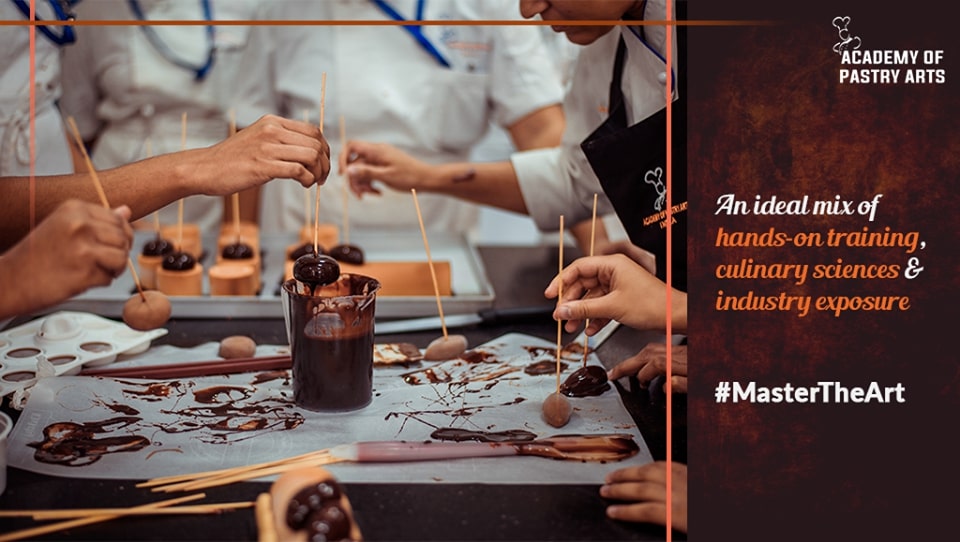
Culinary schools like Academy of Pastry and Culinary Arts (APCA) group of Professional Culinary & Pastry Schools with Pan- Asia presence offer fully interactive culinary courses, by world-class -chefs. Taught through Video recording that can be used any time and recipes in PDF, this academy uses cutting-edge technology, mixed with ingenious techniques, specifically designed to teach the art, science, and techniques of creating good food and methods needed to excel in the food industry. It’s a course module that is designed with a vision to advance chefprenuership, culinary arts, and the Food & Beverage profession with integrity and meaning.

Top Baking Institute In Mumbai

Be it Birthdays, marriages, anniversaries, festivals, or any special occasions, cakes complete them. It is now a symbol of celebration that opens doors to big careers for bakers. In the hustle-bustle of Mumbai city, you will find many baking institutes offering baking classes online. We have dug out a few of our favourites for you. 

The Academy of Pastry & Culinary Arts – is run for and by the people who are passionate about baking and culinary art. It is here that students are introduced to modern equipment and high-quality ingredients and will learn multiple baking concepts under the guidance of highly professional patisserie chefs. It is a complete institute providing educational programs, ranging from full-time diplomas to part-time courses. With online classes being the need of the hour, the same is offered by world-class chefs in a video form that can be accessed later on as well. The Academy of Pastry & Culinary Arts introduces and disseminates world-class culinary and pastry education to make Pastry Art and Culinary Art, one of the most sought after career options in India. The Mumbai academy of this pan Asia enterprise is spread over an area of 10,000 sqft, with 6 well-equipped kitchens coupled with a student lounge, cafeteria, storeroom, and an oven room. So, for all the aspiring chefprenuers out there, this academy and it’s courses are worth exploring.

Gourmet Studio – caramelized walnut tart, an apple cinnamon tart, fruit and praline cream flan, chocolate crunch tart, fresh strawberry glazed margarita tart, and a spinach & corn quiche, these are what you will be created once you enroll here. Run by a passionate baker in Colaba, they have one-day courses and tons of options. The various courses include cupcakes, low-calorie cakes, bread-making, chocolates, eggless French macarons, Danish pastries, and more.

The Eighth Studio – if you want to leave a class not just with a handful of recipes, but with a new-found love for baking and ingredients, then this French bakery and cooking option is just for you. From making classic French tarts to advanced pastry and from exotic desserts to an aesthetic rainbow cake– she holds several workshops every month. 

Palate – if you plan to bake professionally or make a career in baking with the international exposure then this is the place for you. While they have major culinary skills courses, they have an amazing course for professional baking and eggless baking as well. Each of their courses comes with a UK certification from a London based accreditation board. 

Cocoa Cottage – want your baked cake to match the ones served in fine dining restaurants? then we’d recommend heading to this baking class in Mumbai. They offer holistic learning from throwing light on history about a baking community to food photography. With more than 30 courses, they have some interesting ones on a platter like sugar-free muffins, artisan bread, Paleo brownies, different cakes with unique flavors like Blueberry crumble, Orange chiffon, spicy plump, lemon polenta, etc. 

How To Become A Pastry Chef

A culinary professional WHO specializes in the creation of baked goods and desserts is called a pastry chef. Their daily activities take place in the pastry department or bakery station within a commercial kitchen. Strong communication and executive skills are important traits, as they often supervise the work of other cooks or bakers who are responsible for the preparation of ingredients or other aspects of the baking process.  

Here are some important steps to keep in mind in order to master as a pastry chef.

1. Learn the Basics 

The demand for quality pastry chefs also increases, as the popularity of high-end restaurants increases. Although a pastry chef bakes, a good part of their job is administrative. A pastry chef’s job is to oversee all baked goods prepared in a restaurant, including cakes, tortes, custards, and soufflés. They also supervise pastry cooks and prep cooks by preparing key ingredients that go into baked goods and desserts. They must ensure a high level of food safety and sanitation that meets safety standards for all diners. 

A pastry chef knows food safety laws and requirements and makes sure that all subordinate cooks are following the rules as well. The job requires high attention to detail, extensive knowledge of ingredients, and artistic background with endless hours of work. 

2. Move to Advanced Concepts & Baking Techniques

All culinary schools teach the same basic skills which are the foundation of a building on which the creative juices begin to flow. Once the ability to create bread is perfected, topics such as pastry doughs from phyllo to tart, cakes and their many forms, and finally the most creative of the baking topics, cake decoration. The final topic in most curriculums of the pastry chef course is chocolate making, which involves equal parts of scientific accuracy and creative flair.

3. Real World Experience

Real-world experience is offered during training or as a formal section after classroom work. Externships are common, and one may work as a pastry cook for months before graduating to a pastry chef position. Some pastry chef courses also have restaurants as part of their campus where students work throughout their studies.

4. Keep innovating 

Innovation is the key. Once you know what you’re good at, make it your brand is a statement of your creativity as a pastry chef. Entire careers are made on simple things like frozen desserts or creative local fruit usage. Find your thing and work it until it pays off.

5. Impress People With Your Work 

However much you train, the real experience always comes on the job. So start your job on a positive note and continue moving up in the restaurant hierarchy. Give all you got and be passionate to learn from every chef you come across. Always know where your next step will be after your current job. Do excellent work for every restaurant and impress every executive chef you work with. After all, word of mouth is the biggest resume to make your skills reach other kitchens in town.

6. Build Network 

Network Building is important. The cooks and kitchen workers you’ve worked with are your best connections, especially if you’ve impressed them with your artistic abilities. Building good relationships with these people is the most solid step you can take toward a long and successful career. 

APCA India offers a one year Advance Program in Pastry & Baking, for those interested in becoming a specialized world class pastry chef. Designed by World Renowned Chefs to meet the international standards of learning, this program focuses on 90% of practical training. APCA also offers two Weeks of Intensive Training at their Malaysia center for students & Internships in France & the Middle East thereby making its students competitive on a global level. 

How To Find Best Baking Classes In Mumbai

Be it Birthdays, marriages, anniversaries, festivals, or any special occasions, cakes complete them. It is now a symbol of celebration that opens doors to big careers for bakers. In the hustle-bustle of Mumbai city, you will find many baking institutes offering baking classes. We have dug out a few of our favorites for you. 

Academy of Pastry & Culinary Arts – Is run for and by the people who are passionate about baking and culinary art. It is here that students are introduced to modern equipment and high-quality ingredients and will learn multiple baking concepts under the guidance of highly professional patisserie chefs. It is a complete institute providing educational programs, ranging from full-time diplomas to part-time courses.

The Academy of Pastry & Culinary Arts introduces and disseminates world-class culinary and pastry education to make Pastry Art and Culinary Art, one of the most sought after career options in India. The Mumbai academy of this pan Asia enterprise is spread over an area of 10,000 sqft, with 6 well-equipped kitchens coupled with a student lounge, cafeteria, storeroom, and an oven room. So, for all the aspiring chefprenuers out there, this academy and its courses are worth exploring.

Gourmet Studio – Caramelized walnut tart, an apple cinnamon tart, fruit and praline cream flan, chocolate crunch tart, fresh strawberry glazed margarita tart, and a spinach & corn quiche, these are what you will be created once you enrol here. Run by a passionate baker in Colaba, they have one-day courses and tons of options. The various courses include cupcakes, low-calorie cakes, bread-making, chocolates, eggless French macarons, Danish pastries, and more.

The Eighth Studio – If you want to leave a class not just with a handful of recipes, but with a new-found love for baking and ingredients, then this French bakery and cooking option is just for you. From making classic French tarts to advanced pastry and from exotic desserts to an aesthetic rainbow cake– she holds several workshops every month. 

Palate – If you plan to bake professionally or make a career in baking with the international exposure then this is the place for you. While they have major culinary skills courses, they have an amazing course for professional baking and eggless baking as well. Each of their courses comes with a UK certification from a London based accreditation board. 

Cocoa Cottage – Want your baked cake to match the ones served in fine dining restaurants? Then we’d recommend heading to this baking class in Mumbai. They offer holistic learning from throwing light on history about a baking community to food photography. With more than 30 courses, they have some interesting ones on a platter like sugar-free muffins, artisan bread, Paleo brownies, and different cakes with unique flavours like Blueberry crumble, Orange chiffon, spicy plump, lemon polenta, etc. 

The Different Kinds Of Chefs In The Culinary World

Becoming a chef is surely an unorthodox career path for many in India, but it certainly is a very rewarding path, if one is serious in pursuing it. However, to pursue your career of becoming a chef, you would definitely need to do chef courses from a respectable culinary school such as APCA India. Without a professional backing, finding a job as a chef becomes a very tough task. However, there are a lot of different chefs out there! So, you can specialize and become the kind of chef you want to be! That’s the upside of studying in a good culinary school. Here are some types of chef you will probably become while pursuing your dream in the kitchen

Executive Chef

This is the person who controls all the operations in a restaurant. This is the position of a chef who is responsible for the fluidity of chef-related operations. If a restaurant isn’t working right – making the customers wait a lot, it can be pinned upon the head of the executive chef. In kitchen hierarchy, an executive chef is at the top.

Chef De Cuisine (head chef)

The head chef comes under the jurisdiction of the executive chef. But most restaurants do not have an executive chef. In many restaurants, the head chef and the executive chef are the same person! The head chef is also responsible for putting new dishes and specialties on the menu, so a Chef De Cuisine has a lot of creative control in the kitchen.

Sous Chef

If you have a complaint with your dish, you will probably have to take it up with the Sous Chef. The Sous Chef is the one who handles every dish, making sure it is perfect. This Chef works in the kitchen with other chefs to ensure that what goes out is of the standard quality. Of course, the workload can become heavy and thus, many restaurants employ a number of Sous Chefs

Pastry Chef

As the name implies, Pastry Chefs are the ones who handle dessert, especially if you’re in a French restaurant which has a lot of pastries. In other restaurant, a pastry chef generally handles all the desserts.

Station Chef

There are multiple station chefs in all restaurants. The station chefs stick to their station, one specialization or part of the kitchen. For instance, there are stations for grilling, making soup or salads. These Chefs are the basic units of a kitchen and they make sure everything runs smooth in their own departments.

Saucier

The saucier is the one who handles all the sauces. Depending upon the cuisines a restaurant offers, a saucier is employed. In most French-themed restaurants, you will find a saucier as sauces are an essential part of the French cuisine. In a way, the only work of the Saucier is to make perfect sauces which can be utilized by other chefs

The only thing you need to do is get into a chef course and you might have the chance of working in a proper restaurant! If you’re in Bangalore, you should check out chef courses offered by APCA India.

Culinary Courses in Mumbai – Nutrition & Food Safety

You wouldn’t understand the meaning of food safety as long as it is going inside your stomach and not harming you with an infection or food poisoning. In today’s “on-the-go”  lifestyle, many of us do not take the basic safety measures of washing our hands properly and start eating food. Until one day when we have an upset stomach or maybe a chronic infection, we get to know about it only after an investigation from a Doctor.  And then we go through a course of antibiotics to sober our stomach. Nobody likes pain, no matter how less it is. So why do you be so irresponsible when it comes to our bodies. Things get worse when we are responsible for someone else’s ill health. And if you are choosing a career of food and hospitality,  then there are many things to ponder upon. You cannot be negligent about the hygiene factor. One mistake can lend you in guilt for life. More importantly, it will ruin your reputation and if in case you have your food and hospitality business, your hard-earned reputation will go under the drain. This is just one instance of food safety. There are many ways that your food might get contaminated.

Just like food is a requisite to life, hence food safety is equally important. Innumerable people in the world are at risk of unsafe food. Many millions become sick while hundreds of thousands die yearly. The food chain starts from farm to fork/plate while challenges include microbial, chemical, personal, and environmental hygiene.

There are many points to ponder upon food safety. Some of them include observing thoroughly your materials in the kitchen, tips on how to keep your liquid safe, temperature inspection, washing and coverage of hands,  proper dress code, cleaning of the surfaces, proper positioning of potential flammables, and proper selection of the said cleaning.

There are many blogs and YouTube videos for food safety. But as you all know half knowledge is dangerous. Without a proper course or without learning the management of food safety under proper guidance you might land in trouble. Hence culinary courses will teach you the proper way of handling food safety. Out of many colleges, APCA is one of the best culinary colleges in Mumbai where you can pursue the course of food safety. Here culinary students are being coached to add to the ever-expanding foodservice workforce. A survey of culinary arts students in two programs was designed to assess knowledge of 1) Preservation of good personal sterility, 2) keeping work areas unblemished and safe, 3) food handling practices like adequate cooking and holding temperatures.

And of course, after acquiring a degree or diploma in a department like food safety you will get more credibility, your network will get expanded, you can gain new skills which will enhance your current career,  getting exposed to a new path and you will be able to have a promising career in the field.

Careers In The Culinary World

Taking up a career in the culinary world is a very unorthodox choice. But not for those who have the love for cooking in their heart. There is a very big misconception among the people about careers in the culinary world. If one mentions culinary classes, the only thing that comes to mind is kitchen and cooking. However, there are also careers in the culinary world where you do not necessarily need to cook or be in the kitchen. Once you graduate from a culinary institute, there are loads of career options you can choose from. Moreover, the pay is great and one can really rise to the top easily if they’re committed and passionate. Let us take an example – there are lots of cooking channels on the TV which require creative chefs who regularly come up with new dishes behind the scenes. The actor on the TV then proceeds to replicate the dish in front of the camera. However, it is the culinary artist who works behind the scenes and gets all the work done. The most important step is to choose a good institute. The quality of the institute can make a lot of difference. If you’re in a good institute, you can get some amazing internships through which you can build a network and rise in the industry quickly. Here are some other career options in the culinary world which you should consider once you graduate from an educational institute.

Food photographers: Behind every fast food chain ad and delicious-looking menus, there is a very skilled food photographer who makes the dish look delicious. In tandem with food make-up artists, the photographer brings out the aesthetic side of the food. If you’re skilled with a camera, you might want to consider this career path as an option.

Specialty Bakers: Many restaurants and almost all bakeries require bakers who specialize in one dish or another. There are specialized courses for aspiring bakers which can greatly enhance their knowledge in the field. Baking is more of an art and thus, there is always a need of talented bakers in the industry.

Food Bloggers: There are people who write about food and they are as important as the chefs themselves. These are the people who give the general public an idea about cooking, different restaurants, dishes, etc. Many people refer to a review or a blog about a particular restaurant before they dine there. Moreover, many people read up about dishes before they actually try them. If you’re skilled with pen and paper, you might definitely want to pour your love for food in the form of words on a paper. Once you have established a reputation for yourself as a food blogger, you can even become a food critic. Many restaurants invite food critics to try out their new dishes, so they can review and write about them.

To access all these careers, one needs a good education. And for good education, one needs a good educational institute. APCA is one such institute which is located in Delhi and many other cities. You can definitely check it out if you want to make it big in the culinary world.

Design a site like this with WordPress.com
Get started